Why Epoxy Floors Yellow (And How to Prevent It)
Epoxy floor yellowing happens when UV light breaks down the aromatic resins in standard epoxy coatings, creating discolouration that worsens over time. Garages with windows or south-facing doors are most affected. Garage Floors 4 Less Edmonton installs UV-stable nanospartic garage floor coatings that resist yellowing across Edmonton's summers.
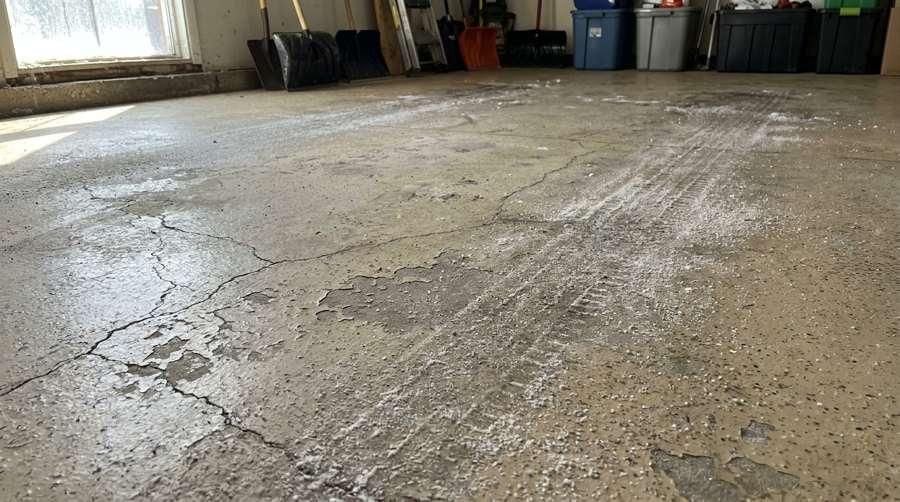
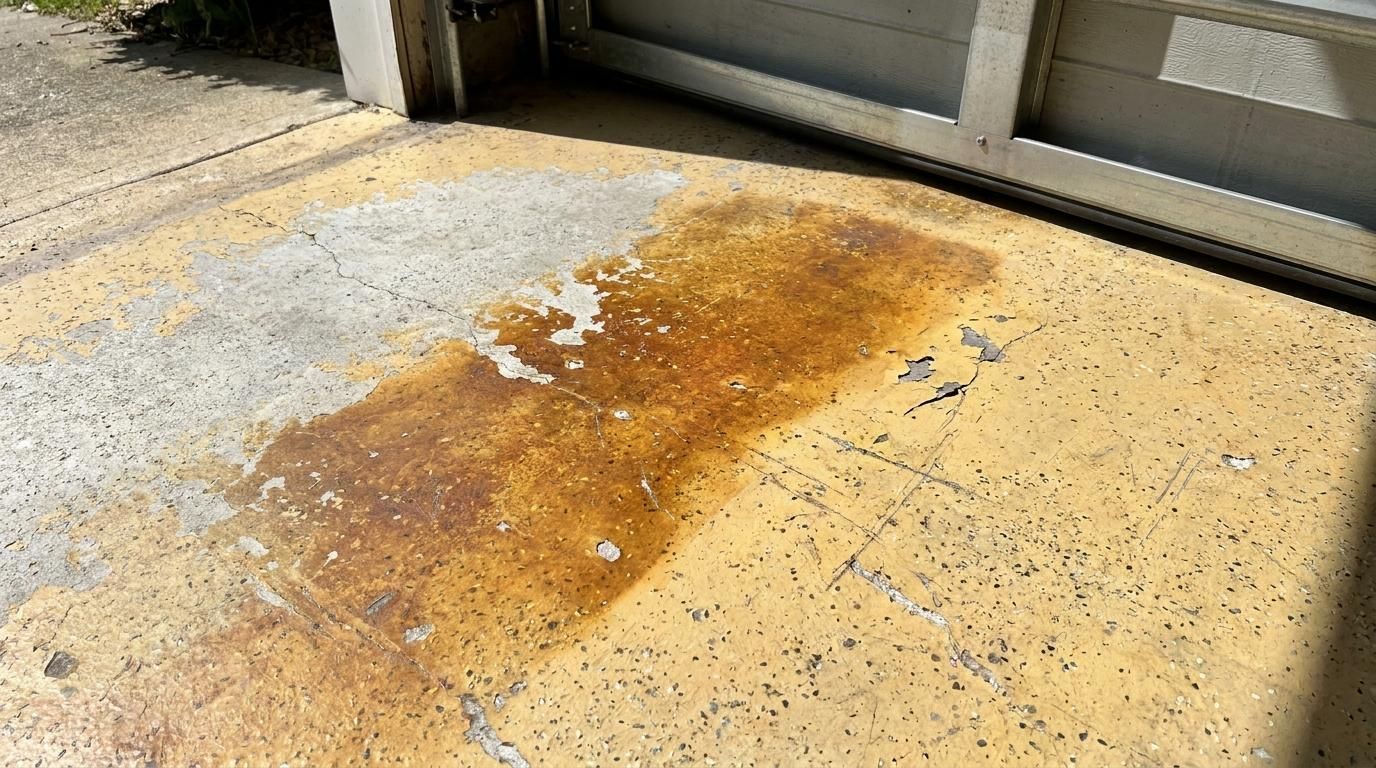
A Sherwood Park homeowner noticed their light grey epoxy floor had turned a patchy yellow-brown within 18 months. There was no peeling and no chips, but the colour had shifted enough to make the floor look dirty even after cleaning. The problem wasn't upkeep. It was the coating chemistry.
What Causes Epoxy Floor Yellowing?
Standard epoxy coatings use aromatic resins that absorb UV radiation and degrade at the molecular level. Understanding the mechanism explains why cleaning and maintenance can't fix the problem.
UV Degradation
The aromatic compounds in most epoxy formulations contain benzene rings that are highly susceptible to UV light. When UV photons hit these molecular structures, they break polymer chains and create yellow chromophoric groups. The result is a progressive colour shift from the original finish toward amber or yellow-brown tones. Light-coloured and clear epoxy surfaces show the change first. This is the same UV vulnerability that causes epoxy floors to bubble and peel when combined with moisture vapour transmission.
Heat and Moisture Amplifiers
High garage temperatures during Edmonton's summers accelerate the chemical degradation. Thermal expansion and contraction from the city's extreme temperature range create micro-cracks that allow UV to penetrate deeper into the coating. Moisture vapour rising through the concrete slab during spring thaw can also cause incomplete curing at the epoxy-concrete interface, leaving unreacted hardener components that oxidise and yellow.
Low-Quality Materials and Application Errors
Budget epoxy kits from hardware stores use the cheapest aromatic resins available, with minimal UV inhibitors. Incorrect mixing ratios during application leave unreacted hardener compounds that are especially prone to oxidation and yellowing. Even a well-mixed aromatic epoxy will yellow eventually, but poor mixing and thin application accelerate the timeline from years to months.
How to Prevent Yellowing on Your Garage Floor
Preventing yellowing starts with choosing the right coating chemistry for your garage's conditions.
Choose a UV-Stable Coating System
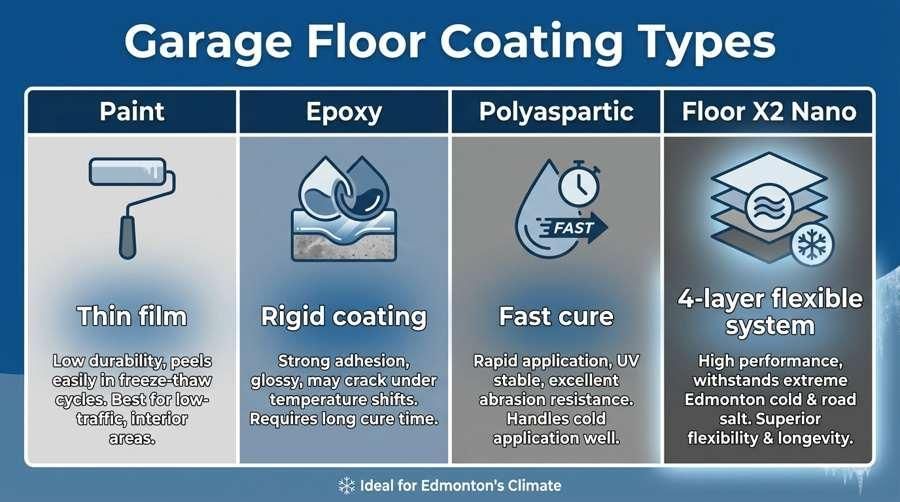
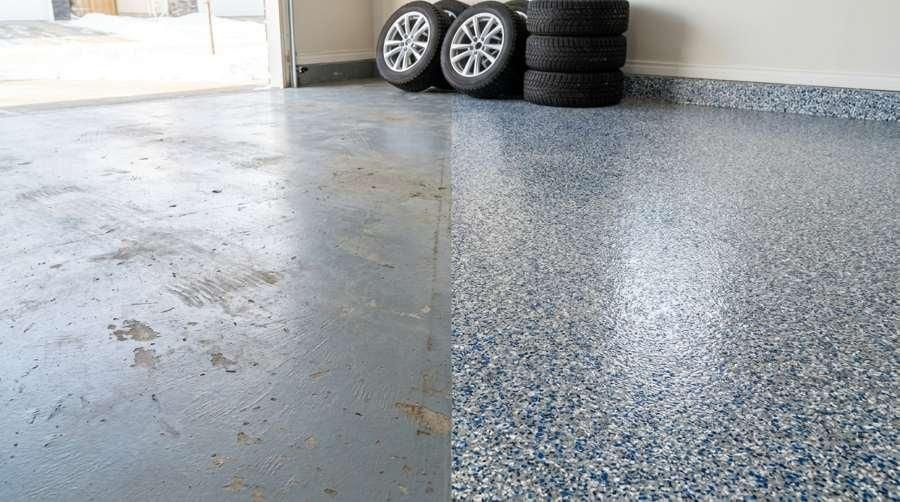
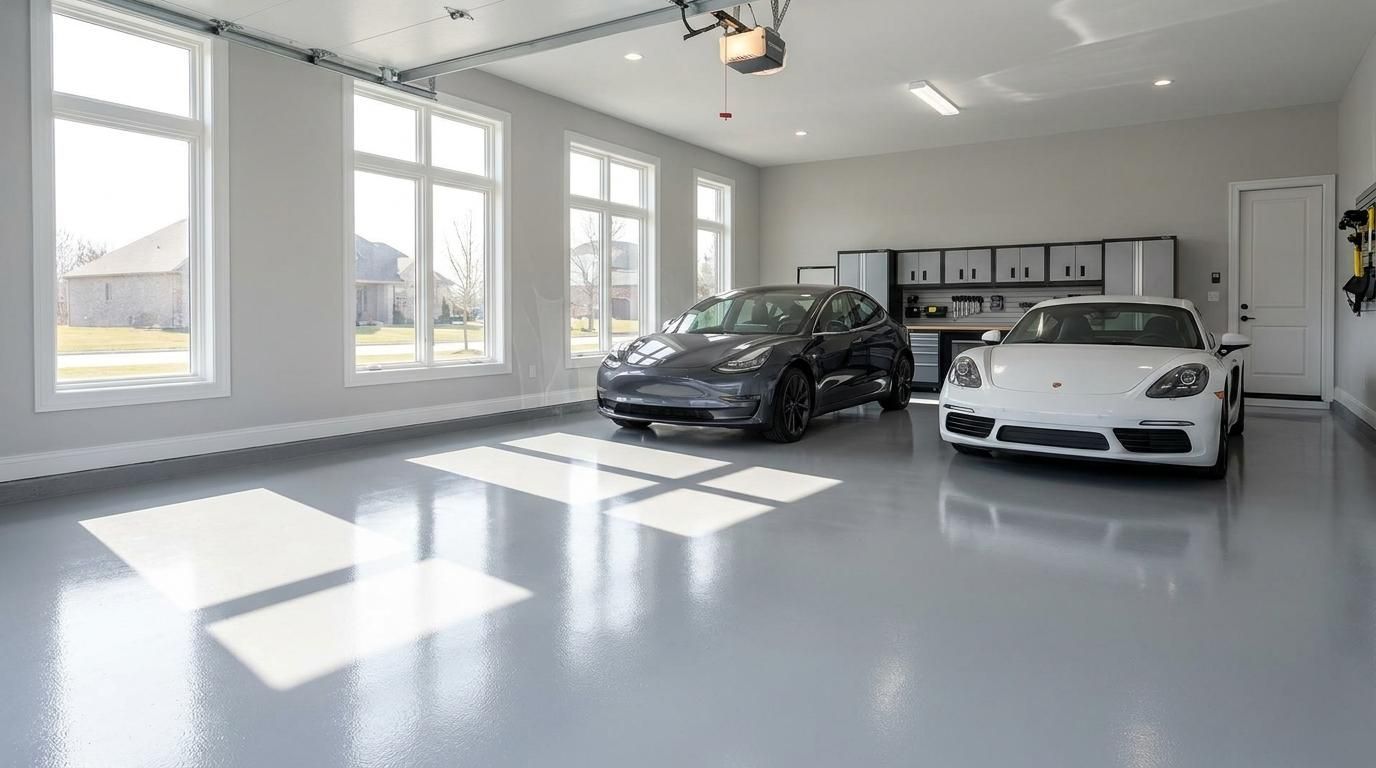
The most effective prevention is avoiding aromatic epoxy entirely. Polyaspartic and nanospartic coatings use aliphatic chemistry that doesn't break down under UV exposure. The Floor X2 Fusion + Nano system that Garage Floors 4 Less Edmonton installs is UV-stable by design, maintaining its colour and gloss without yellowing. The same technology extends to outdoor concrete coatings for patios, walkways, and driveways where UV exposure is even more constant. For garages with significant sunlight from windows or a south-facing door, the UV stability of the topcoat matters as much as the base layers.
Limit UV Exposure in the Garage
If you already have an epoxy floor, reducing sunlight exposure slows the yellowing process. Window tinting, UV-filtering garage door panels, and keeping the door closed during peak sun hours all help. These measures delay the degradation but don't eliminate it. The underlying aromatic chemistry remains vulnerable to whatever UV reaches the surface.
Address the Root Cause, Not the Symptom
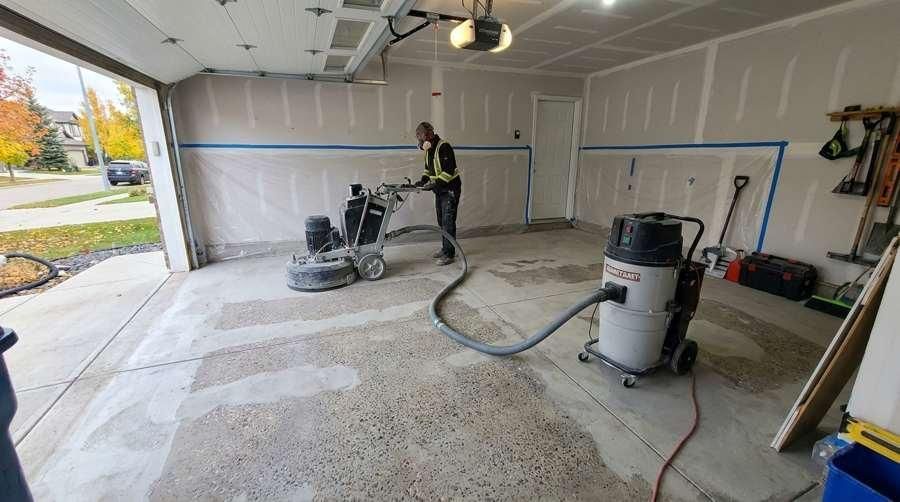
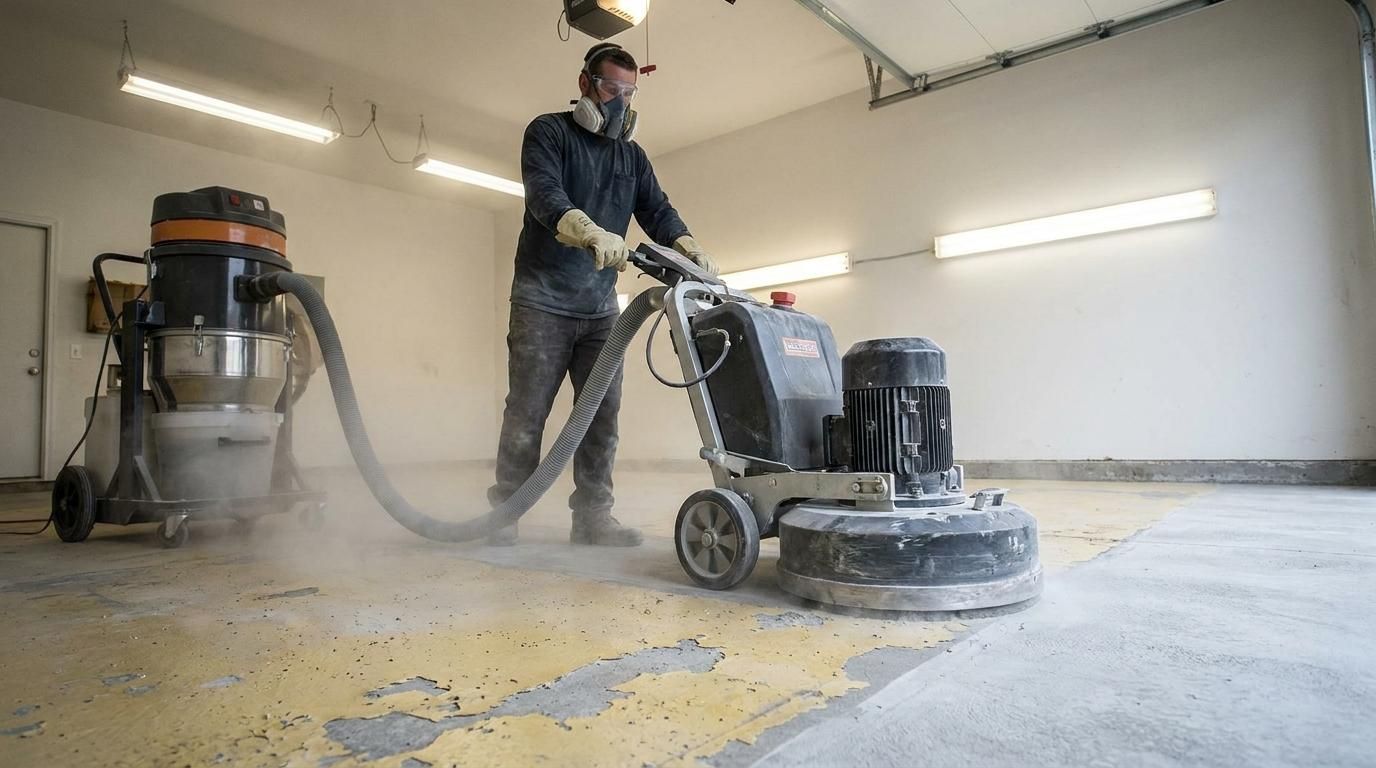
Applying a UV-stable topcoat over existing yellowed epoxy can restore appearance temporarily, but the underlying epoxy continues to degrade beneath. For a permanent fix, the old epoxy should be removed through professional diamond grinding and the floor recoated with a UV-stable nanospartic system. Garage Floors 4 Less Edmonton handles the full process across the Edmonton service area , from stripping failed coatings to installing the Floor X2 Fusion + Nano system.
Frequently Asked Questions
Can yellowed epoxy be fixed?
Surface cleaning won't reverse UV yellowing because the discolouration occurs within the coating's molecular structure. The most effective fix is stripping the old epoxy through diamond grinding and recoating with a UV-stable polyaspartic or nanospartic system that resists future yellowing.
Does polyaspartic coating yellow over time?
Polyaspartic coatings use aliphatic chemistry that resists UV degradation, so they maintain their colour and clarity far longer than aromatic epoxy. The Floor X2 Fusion + Nano system Garage Floors 4 Less Edmonton installs is specifically engineered for UV stability through Edmonton's long-daylight summers.
How quickly does epoxy floor yellowing start?
In garages with direct sunlight or south-facing windows, visible yellowing can begin within 6 to 18 months of installation. The speed depends on UV intensity, coating quality, and application conditions. Lower-quality aromatic resins from hardware store kits yellow faster than higher-grade formulations.
Keep Your Garage Floor Looking the Way It Should
Epoxy yellowing isn't a maintenance failure. It's a chemistry failure built into the product. Aromatic resins can't withstand UV exposure without degrading, and no cleaning routine fixes what's happening at the molecular level. Choosing a UV-stable coating from the start eliminates the problem entirely. The Floor X2 Fusion + Nano nanospartic system resists yellowing, cracking, and peeling through Edmonton's full range of conditions, from winter nights below -30°C to bright summer afternoons. Every installation is backed by a 15-year all-inclusive warranty.
For a free quote on replacing a yellowed epoxy floor or coating a new garage, contact Garage Floors 4 Less Edmonton or call (825) 523-4345 .